Pneumatic soil loosening for breathable soil


The relationship between soil and plants
The condition of vegetation always reflects the condition of the soil.
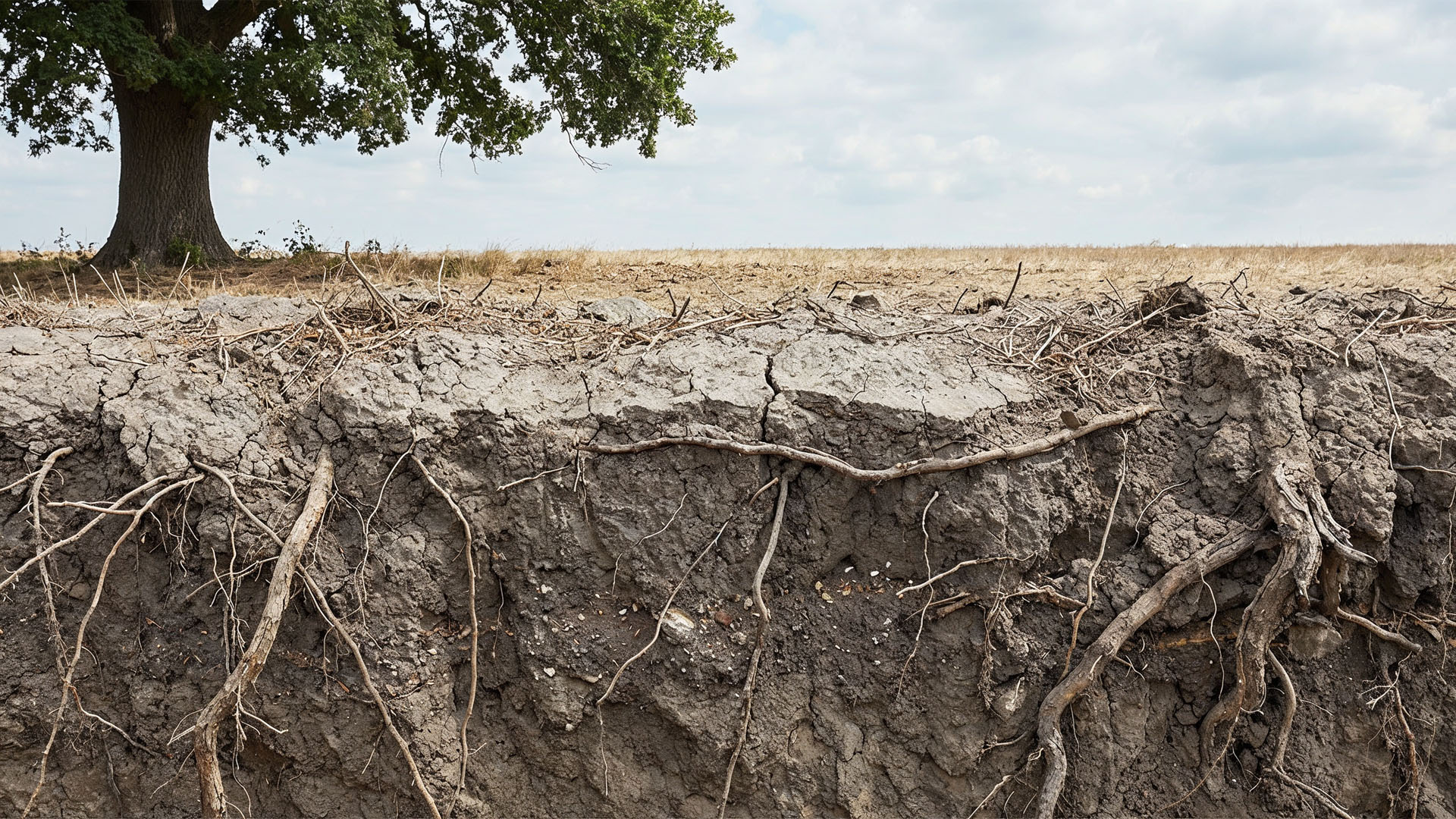
If the soil structure is inadequate or damaged, the movement of air and water changes, and the development capacity of the root zone becomes severely limited. The problems visible on the surface are merely indicators.
Compacted soil is unable to perform its basic function. Water cannot infiltrate, oxygen does not reach the roots, and the plant stand gradually loses its stability. Surface-level interventions in such cases provide only temporary solutions.
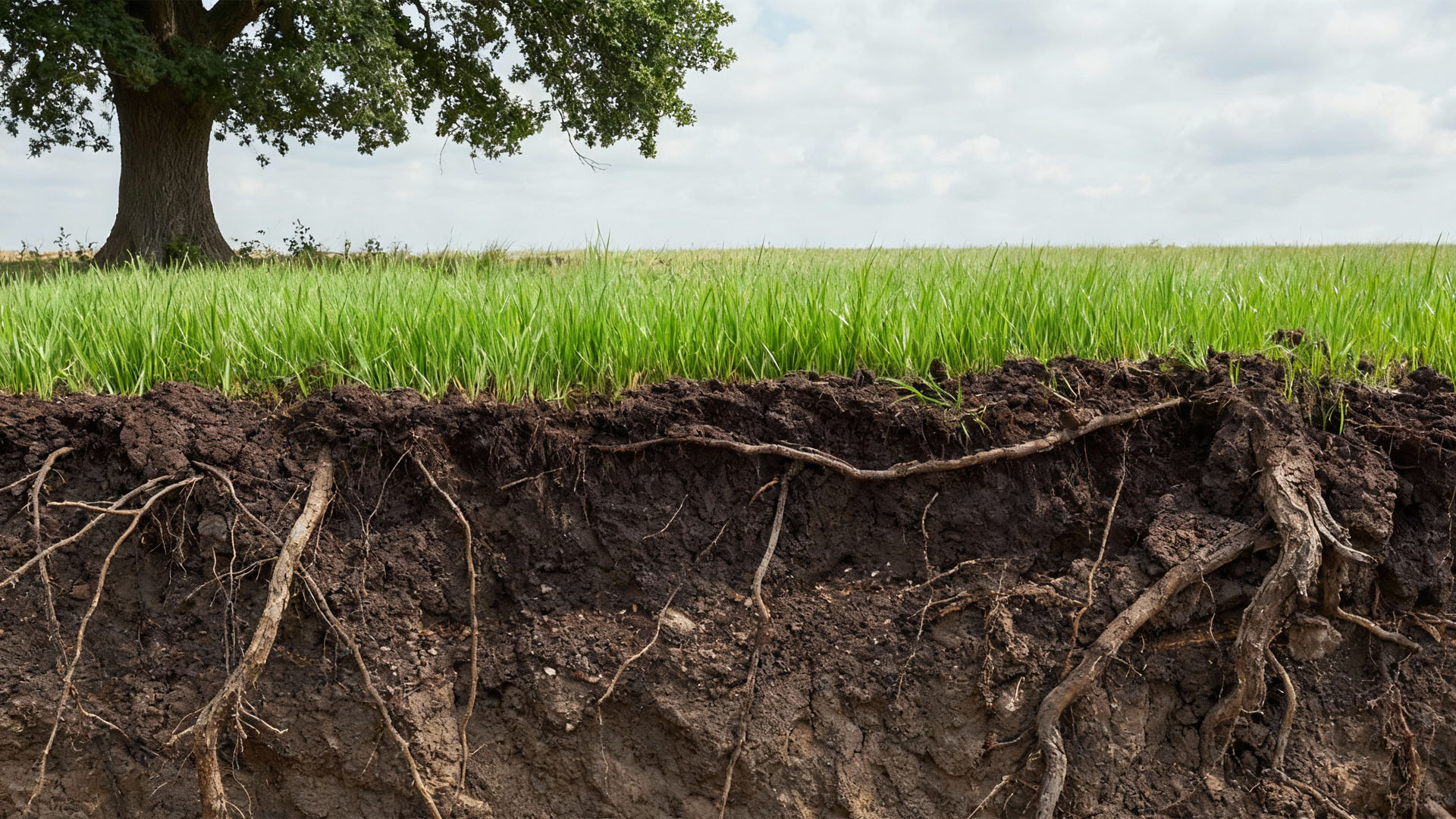
Our approach focuses on soil structure. We intervene in a targeted way at the root zone level, without disturbing the surface, to restore the soil’s natural function, its water and air balance, and its stability.
The solution works where the problem originates. This is not a quick fix, but a system-level intervention. Lasting results always arise when the soil is once again able to fulfill its role.
Let us not forget: “Healthy plants can only develop in healthy soil.”
How the intervention works
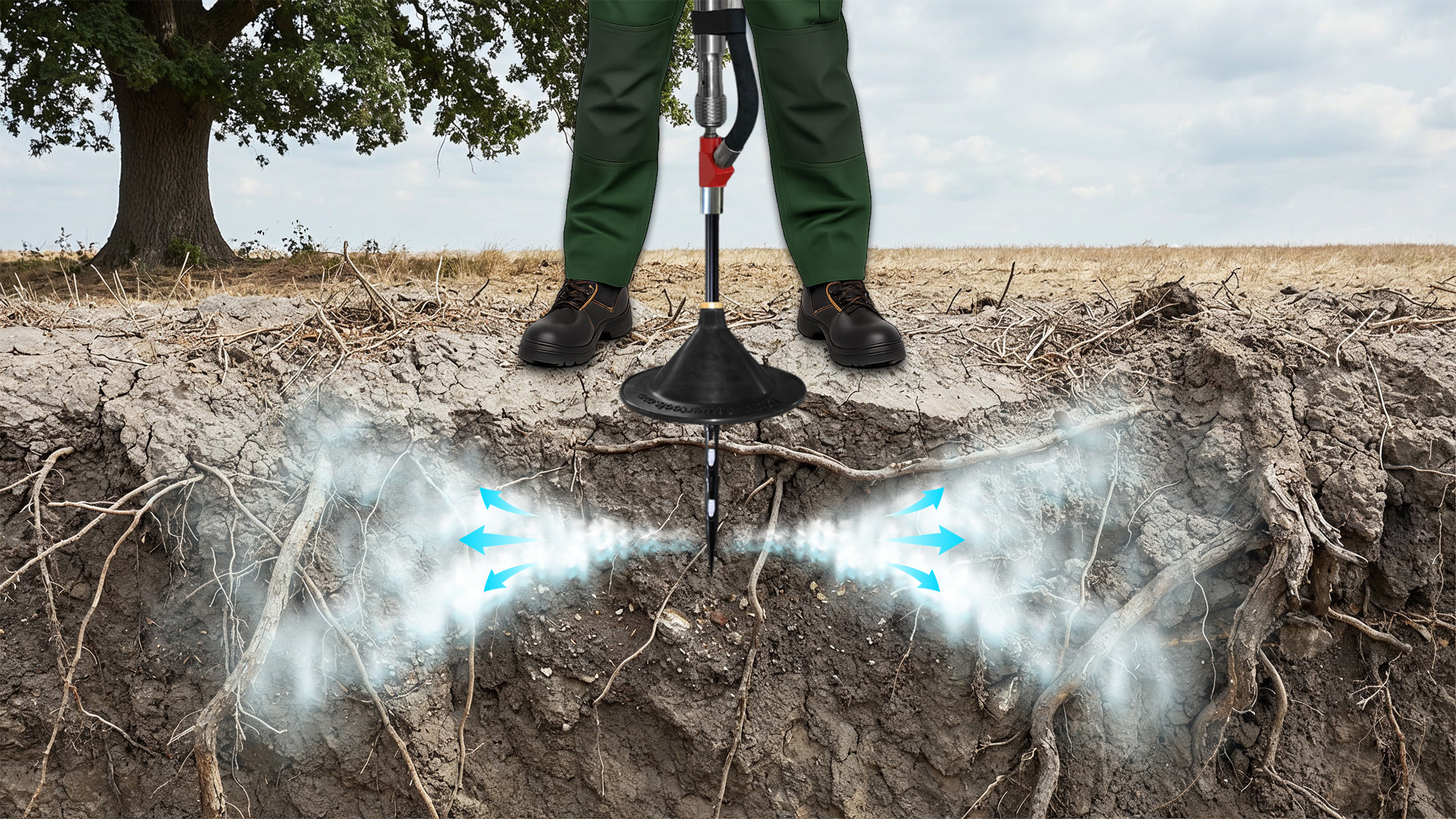
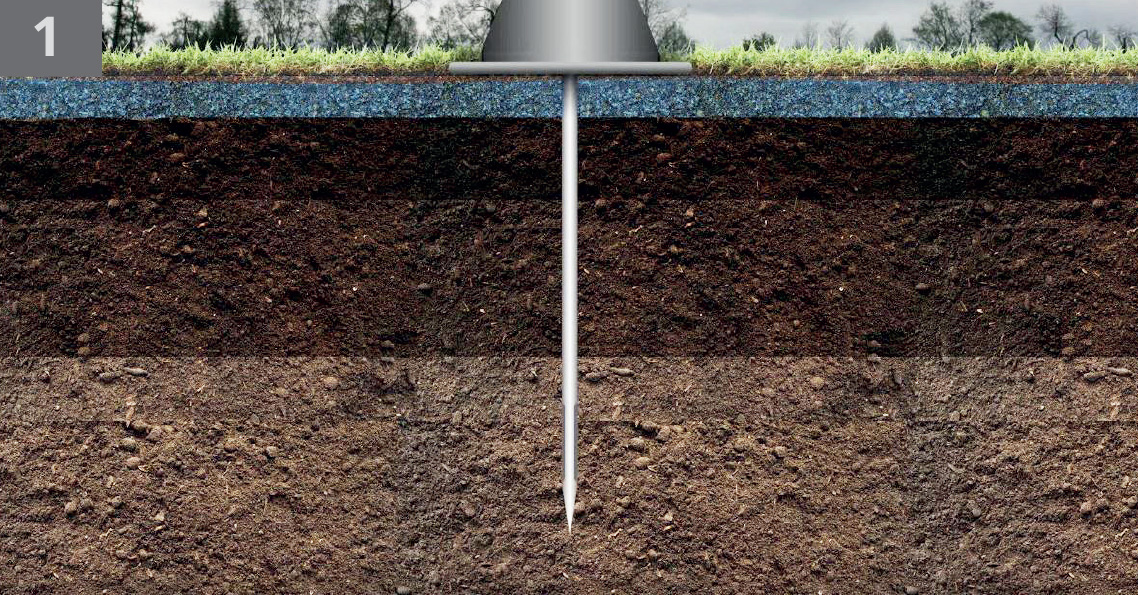
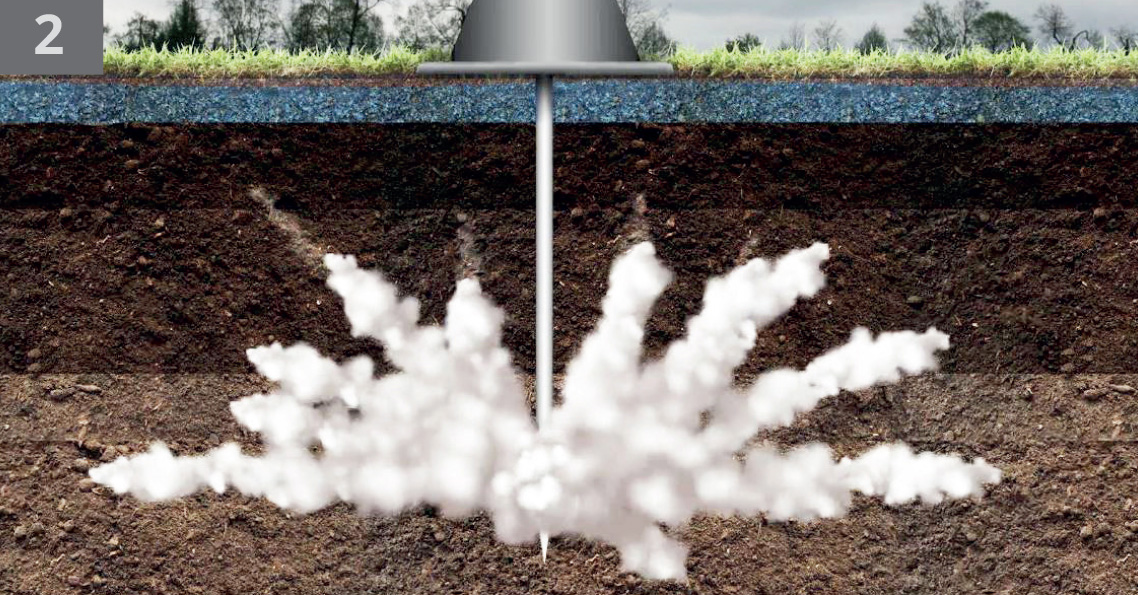
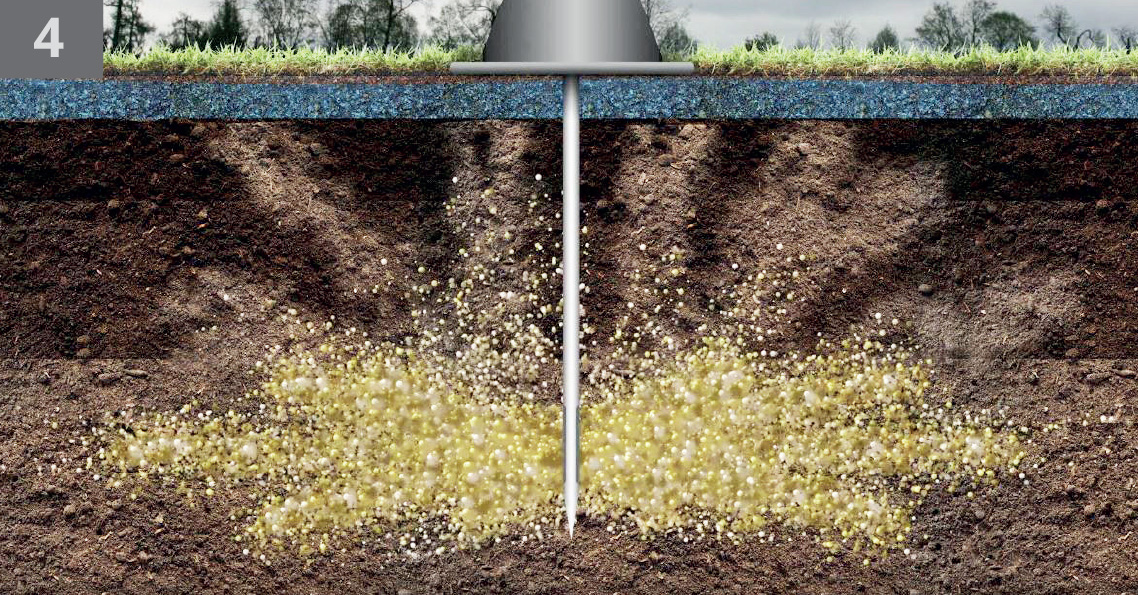
The aim of the operation is to loosen compacted soil structure and enable the development of the root zone. During the process, air — and, depending on site conditions, soil-improving materials — is introduced into the deeper soil layers.
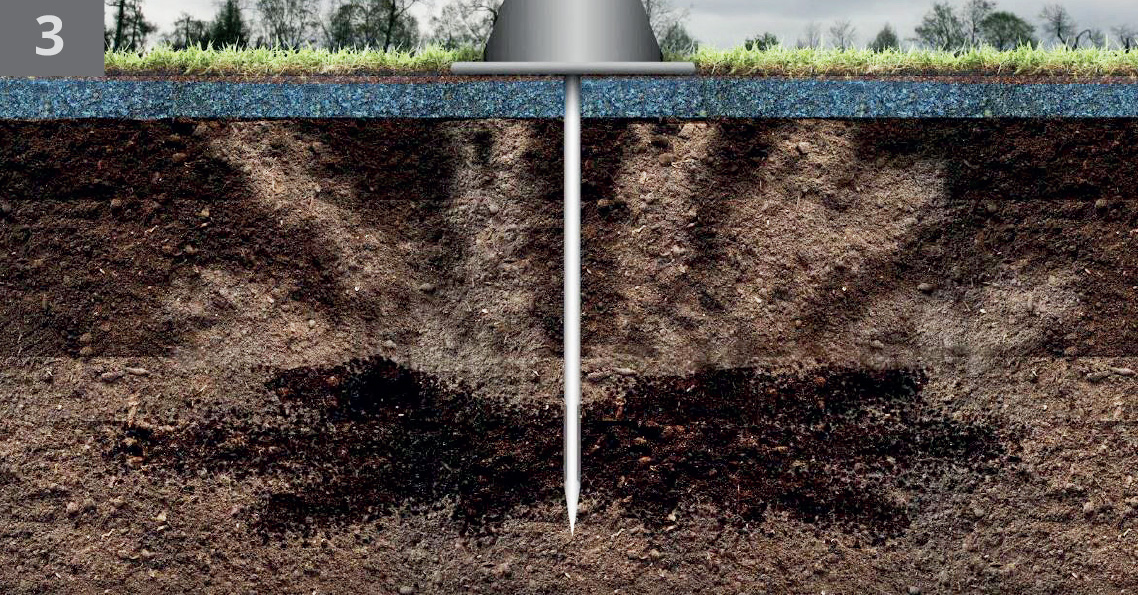
The compressed air causes the soil structure to fracture, creating microcavities and capillaries.
These channels allow excess water to drain into deeper layers and become available to the root system again during drier periods. They also help oxygen reach the roots, enabling the soil to once again perform its essential functions.
The intervention is precise and targeted. It does not disturb the surface, involves no excavation, and does not damage existing vegetation. The area remains usable immediately after the work is completed.
The method does not offer a symptomatic treatment. By improving soil structure, it creates conditions in which plants can regenerate naturally and develop in a stable manner.
The results are visible at the surface, but they are determined within the soil.
Benefits of the intervention
 Long-term solution, not repeated symptomatic treatment Wide range of applications: green spaces, parks, urban trees, tree rows, private gardens, arboretums No soil replacement required Regeneration of soil life Improved drainage and water retention capacity Permanent elimination of standing water and soil compaction Preservation of existing vegetation No destruction or surface damage; the intervention leaves no visible traces and can therefore be applied in already established gardens Soil amendments introduced into the soil can reduce irrigation costs by up to 30% Targeted measures to eliminate nutrient deficiencies or to counteract damage caused by road salt and other harmful substances Direct delivery of oxygen and required soil amendments into the root zone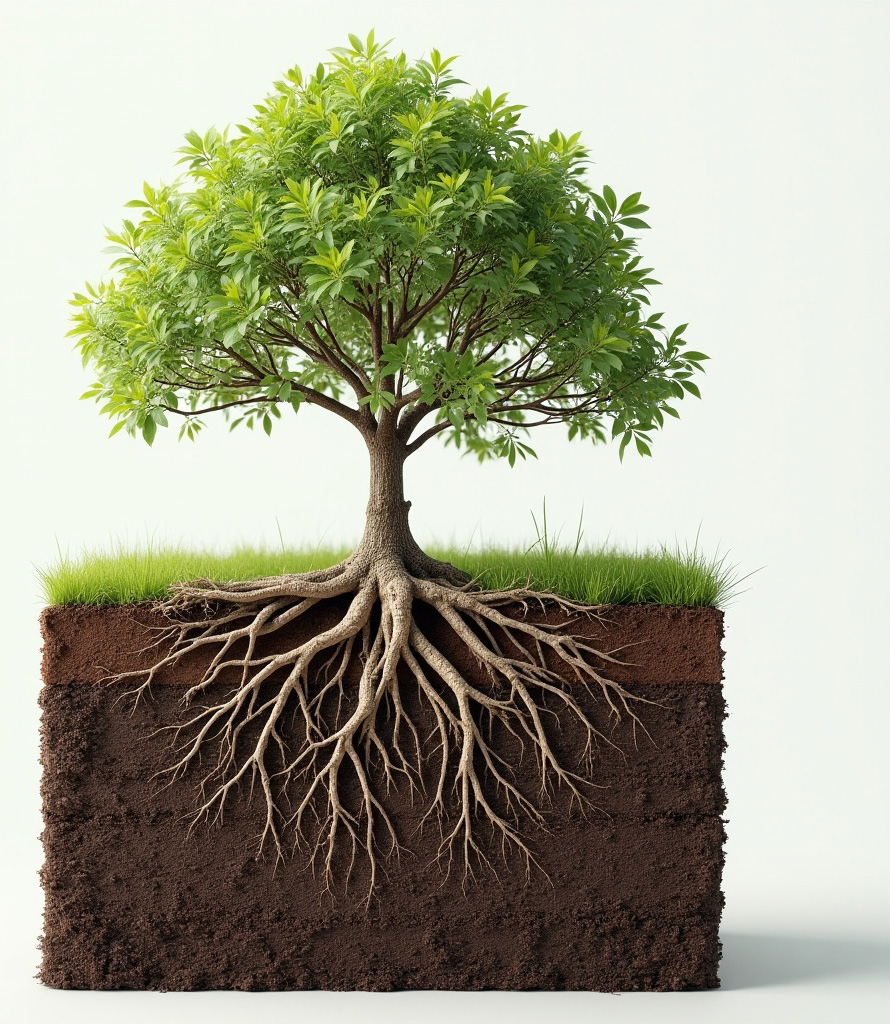

Why this method is necessary
Post-treatment of compacted soil
Post-treatment of compacted soil always comes with limited options. Most conventional solutions can only be applied during the initial construction or landscaping phase, or when complete surface disturbance is acceptable.
A method without demolition or heavy machinery
In contrast, pneumatic soil loosening is the only method that allows for the subsequent improvement of soil structure and soil life without demolition, destruction, or heavy machinery. The intervention is carried out in a targeted manner within the root zone, while the surface and existing vegetation remain intact.
Effective placement at the proper depth
Many soil-improving amendments can only be effective if they are placed at the appropriate depth. Surface application in most cases does not yield real results: the materials are washed away, break down, or simply fail to reach the area where they are needed. Retrofitting these materials into deeper soil layers using conventional tools is often impossible or can only be achieved at the cost of significant damage.
The only realistic solution in restricted environments
In urban environments, this challenge is even more pronounced. For tree rows and green spaces confined between concrete and paved surfaces, disturbing the soil is often simply not an option. Under such conditions, pneumatic intervention is frequently the only realistically applicable solution.
The same applies to already established, high-value gardens. No one wants to reconstruct an expensive but poorly built garden solely due to underlying soil problems. This method makes it possible to address such issues while preserving the existing environment.
This approach does not represent a restart, but a restoration. The method intervenes precisely where needed, without sacrificing the surface or its surroundings.
The method
Pneumatic soil loosening is a targeted intervention that improves soil structure at the appropriate depth without disturbing the surface or damaging the surrounding environment.
During the process, specialized equipment is used to introduce air — and, depending on site conditions, selected soil-improving materials — into the root zone in a controlled manner at depths of 30–90 cm. The extent and depth of the intervention are always adapted to local conditions.
The intervention significantly increases soil permeability, eliminates standing water, and effectively supplies compacted or restricted root zones with oxygen, water, and nutrients. As a result, root growth improves and plant resilience increases.
The essence of the method lies not in force, but in precision. The goal is not to “break up” the soil, but to loosen its structure to a degree that allows natural soil functions to be restored.
The intervention does not require heavy machinery, involves no demolition, and does not necessitate reconstruction of the area. Existing vegetation is preserved, and the surface remains intact.
Application of the method is always based on an on-site assessment and professional decision-making. It is not a one-size-fits-all solution, but an intervention tailored to the actual condition of the soil.
Areas of Application
- Rehabilitation of urban tree planting sites:
Improving soil structure and restoring a healthy root zone in urban environments. - Elimination of standing water in green spaces:
Enhancing soil permeability and preventing root rot. - Direct application of soil amendments and nutrients into the root zone:
Targeted nutrient delivery where it can be utilized most effectively. - Use of water-retaining granules in drought stress conditions:
Supporting plants during dry periods by increasing the soil’s water-holding capacity. - Alleviation of soil compaction:
Promoting soil aeration and supporting natural soil regeneration.


WHO IS THIS SERVICE FOR?
For everyone who wants living, breathing soil and healthy plants – from private gardens to castle parks.
For municipalities and urban maintenance services
To improve the soil of parks, tree rows, promenades, and roadside green belts. We help city trees and shrubs not only survive but thrive even in challenging urban environments.
For private garden owners
If your lawn is patchy, waterlogged, or your plants refuse to grow strong. Deep soil aeration restores air and water to the roots – your garden will visibly come back to life.
For arboretums, castle parks, and historic gardens
Ideal beneath valuable, old trees and special plant collections where heavy machinery cannot be used. Our compressed-air technology loosens the soil gently and without damage, preserving both plant and heritage values.
For institutions, sports, and recreational areas
Perfect for school gardens, sports fields, playgrounds, parks, and golf courses. Compacted soil caused by continuous use is re-aerated, making lawns more resilient and permanently greener.
For roadside, industrial, and public green areas
For tree lines along roads, industrial parks, and parking area green belts, where soil stress is particularly high. Deep loosening improves drainage and soil life, ensuring long-term plant vitality.
For landscape designers and gardeners
For planners, contractors, and maintenance professionals who don’t own such specialized equipment but wish to offer professional soil renewal. With our service, you can perform work that would be virtually impossible with manual tools.
For lawn and plant enthusiasts
For everyone who loves a lush, well-kept, healthy lawn and vigorous plants. Deep aeration is one of the gentlest yet most effective methods of lawn rejuvenation – for hobby gardeners and professionals alike.
In summary
Deep air loosening of soil can be applied anywhere the soil is compacted, water stagnates, or plant growth has declined.
This technology:
- is natural and chemical-free,
- is environmentally friendly and long-lasting,
- delivers visible results in a short time,
- and creates value in every green space – from parks to private gardens.
About us
The focus of our work is the improvement of soil structure and soil life. Our activities are based on practical experience, measurements, field observations, and the consistent application of the method.
Our goal is to carry out interventions that enhance soil functionality where surface-level solutions no longer deliver results. Throughout our work, protecting the environment, respecting existing vegetation, and maintaining the usability of the area are key priorities.
We aim to provide solutions in all areas where soil conditions limit the healthy development of plants and trees — solutions that offer a more stable, long-term foundation for green spaces, whether urban tree rows, parks, or valuable private properties.
Our work restores soil function rather than altering the surface.
This approach is reflected in every step of our service and ensures that each intervention is not only effective, but also environmentally responsible and sustainable.
OUR SERVICES
Pneumatic Soil Loosening
Soil Analysis: pH measurement, salinity (EC) measurement, soil activity measurement, soil moisture and temperature measurement, soil compaction testing
Soil Conditioning
Landscape Construction
Garden Maintenance
Paving and Hardscaping




GEO INJEKTOR HUNGARY KFT.
Technology that brings life into the soil!


 22 Zrínyi Miklós Street, 8600 Siófok, Hungary


FAQs
Questions and Answers
- What is soil aeration?
Compressed-air soil aeration is a specialized method used to improve the soil’s nutrient and oxygen supply.The soil is loosened using a special lance, which helps eliminate waterlogging and promotes strong, healthy plant growth.
- How much does soil aeration cost?
- How can I tell if my soil needs aeration?
- Which types of soil are suitable for aeration?
- Is soil aeration possible on clay soil as well?
- Are there different methods of soil aeration?
- Is soil aeration environmentally friendly and sustainable?
- Can soil aeration be used on lawn areas as well?
- How long does the process take?
- Which types of fertilizers can be used?
- What is injected into the soil?